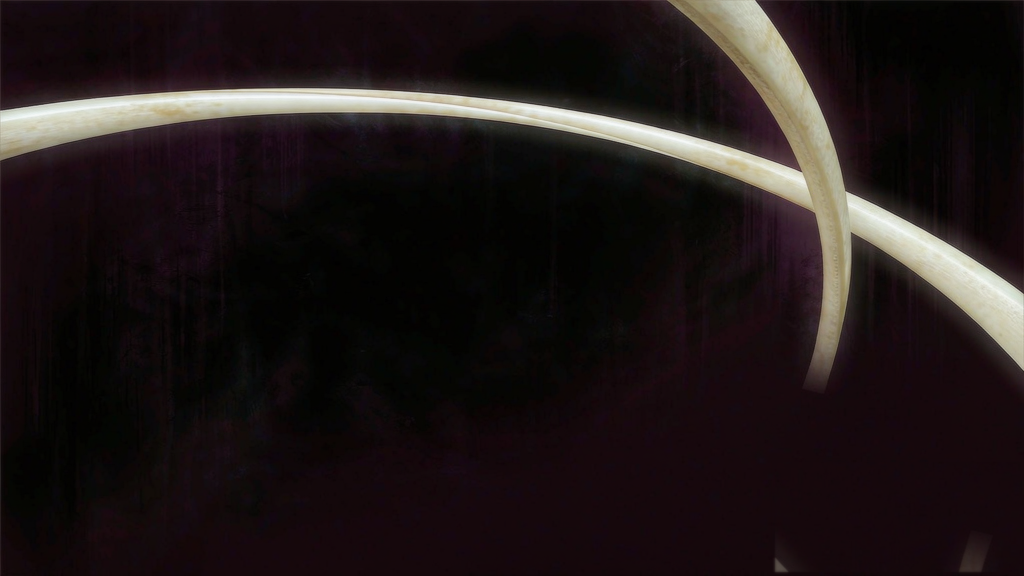
The ridgepole of Great ExceedingGreat Exceeding
In extraordinary times, be an extraordinary person.
Da Guo: four yang in the middle, yin at both ends — a beam too thick in the center, too thin at its bearings. All the load presses the middle; the ridge may snap, or may hold. Such a structure appears when a system is pushed to its limit: the old order can barely stand, the new has not formed. What carries it through is that middle span of people. Da Guo does not offer steadiness; it offers overload.
A line: the withered poplar puts forth sprouts — from decline, new possibility. Da Guo is never a final verdict; it only says the structure is bearing its limit. Those who hold become ridgepoles; those who do not become lessons — the difference often lies only in whether that middle span was solid enough.
Detailed reading
Hexagram 28 is a ridgepole bending under too much weight: the structure is loaded well past what it was designed for.
The picture is plain: a roof beam visibly bowing, with the household still carrying furniture upstairs.
What it gives is the exceptional effort that an exceptional situation genuinely requires. It is a gift with a condition attached, and the condition arrives later.
The two trigrams
Hexagram 28, Great Exceeding, is built from two trigrams: Wind below, which describes the inner situation you are standing in, and Lake above, which describes what the situation presents to the world. Wind below keeps pressing inward while Lake above opens outward, so something has to give along the length of the whole structure.
Wind is yin beneath two yang lines: penetration rather than force. Its image is wood sending roots through soil, and air finding every gap. As a lower trigram it means gradual and largely invisible influence inside you; as an upper trigram it means the situation is being shaped by slow pressure rather than by one decision.
Lake is yin sitting above two yang lines: openness at the surface, pressure underneath. Its image is the marsh, which gathers water and gives it away again. As a lower trigram it means pleasure and exchange as a motive; as an upper trigram it means the outcome arrives through talking, negotiating and enjoying the exchange.
Read together, wind sets the tone inside you while lake shapes what actually meets you outside; the distance between those two is what this hexagram asks you to hold rather than to resolve.
Where it stands in the sequence
Hexagram 28 sits at position 28 of the sixty-four. It follows Hexagram 27 · Mouth Corners and it is followed by Hexagram 29 · The Abysmal. The sequence is not a list of separate ideas — each hexagram is the consequence of the one before it, which is why the book is read as a movement rather than as a dictionary.
It follows Mouth Corners because concentrated nourishment eventually produces something too large for its container.
How to work with Hexagram 28
The specific warning attached to this hexagram is worth taking literally. Its failure mode is pretending the load is normal and continuing to add to it.
What it asks of you instead is modest and concrete. Act quickly and unusually, while staying honest that this pace cannot be maintained.
This is a hexagram that rewards doing the obvious thing badly over planning the ideal thing perfectly.
Related hexagrams
Hexagram 28 has four natural neighbours inside the sixty-four: the two that stand next to it in the sequence, the one produced by reading its six lines in reverse, and the one produced by inverting every line. They are useful because they show the same situation from a different angle rather than describing a different situation.
- Every line inverted: Hexagram 27 · Mouth Corners (頤, Yi) — Thunder below, Mountain above.
- Immediately after: Hexagram 29 · The Abysmal (坎, Kan) — Water below, Water above.
- Its nuclear hexagram: Hexagram 01 · The Creative (乾, Qian) — Heaven below, Heaven above.
- Same lower trigram: Hexagram 32 · Duration (恆, Heng) — Wind below, Thunder above.